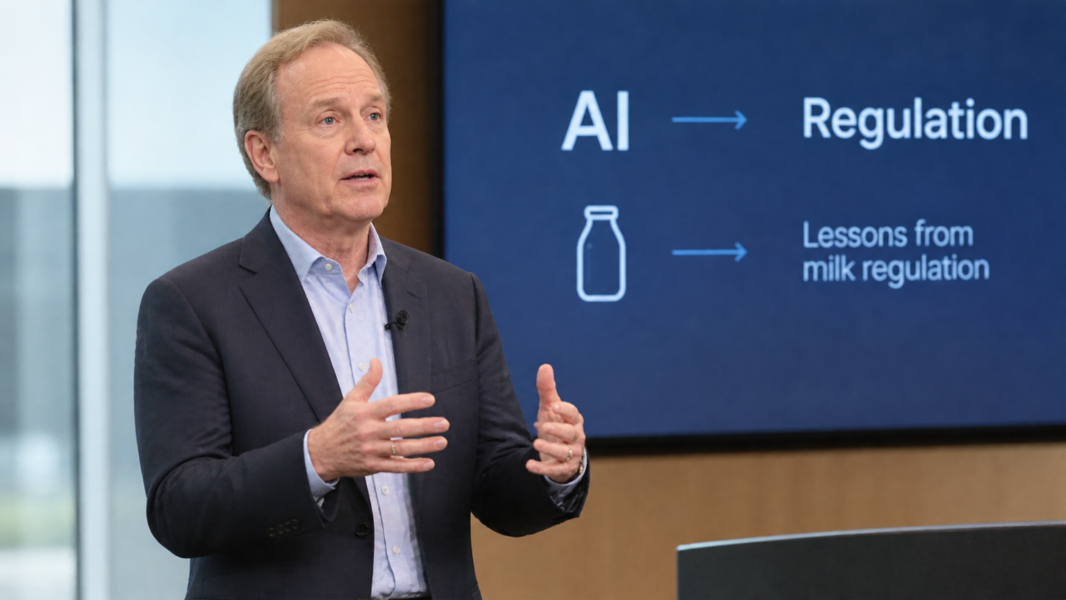
In a recent statement, Microsoft President Brad Smith sparked discussions about the regulatory landscape of artificial intelligence (AI). He highlighted a surprising comparison: AI is subject to less regulation than milk. This assertion brings to the forefront the complex challenges surrounding AI governance, especially as its capabilities continue to evolve rapidly.
Regulatory Landscape of AI
Smith’s comments reflect a growing concern among technology leaders about the insufficient regulatory measures governing AI technologies. As AI systems become more integrated into various sectors—from finance to healthcare—the lack of comprehensive regulatory frameworks raises critical questions regarding safety, ethical use, and potential impacts on privacy.
- Current State of AI Regulation: Unlike industries such as food and pharmaceuticals, where stringent regulations exist to protect consumers, AI technologies are often developed and deployed without such oversight.
- Comparison to Milk Regulation: Milk is regulated under strict health and safety standards in many jurisdictions, ensuring quality and safety for consumers. In contrast, AI development often operates in a less supervised context, prompting Smith’s provocative analogy.
Implications for Businesses and Policymakers
The implications of Smith’s statement are significant for business leaders, entrepreneurs, and policymakers:
1. Need for Robust Frameworks: Businesses leveraging AI technologies may face increased scrutiny as demand grows for regulatory frameworks that can ensure safe and ethical AI practices. 2. Ethical Considerations: As AI continues to evolve, ethical considerations around its deployment—including bias, data privacy, and accountability—must be addressed proactively by companies. 3. Call to Action for Policymakers: Smith’s remarks serve as a call to action for government leaders to engage in discussions that could lead to the establishment of sensible regulations that promote innovation while safeguarding public interests.
Support from Industry Leaders
Prominent figures in the tech industry echo Smith’s sentiment. Figuring like Bill Gates have long emphasized the need for balanced regulation—encouraging innovations while ensuring public safety. This growing consensus may catalyze further dialogue about how best to regulate emerging technologies.
What Readers Should Know
For small business owners, understanding the risks and benefits of AI is crucial. The conversation spurred by Microsoft’s President’s statement underscores the necessity for awareness regarding how emerging technologies are governed.
- Stay Informed: Businesses should stay updated on regulatory changes that might affect their use of AI.
- Engage in Discussions: Engaging in discussions surrounding AI ethics and governance is vital as it directly impacts operational strategies and public perception.
Conclusion
Brad Smith’s assertion regarding AI being less regulated than milk encapsulates a critical conversation at the intersection of technology, ethics, and policy. As AI continues to shape the future of industries, the need for thoughtful regulation becomes increasingly evident. For businesses navigating this landscape, staying informed and advocating for responsible AI adoption will be essential in addressing both current and future challenges.