
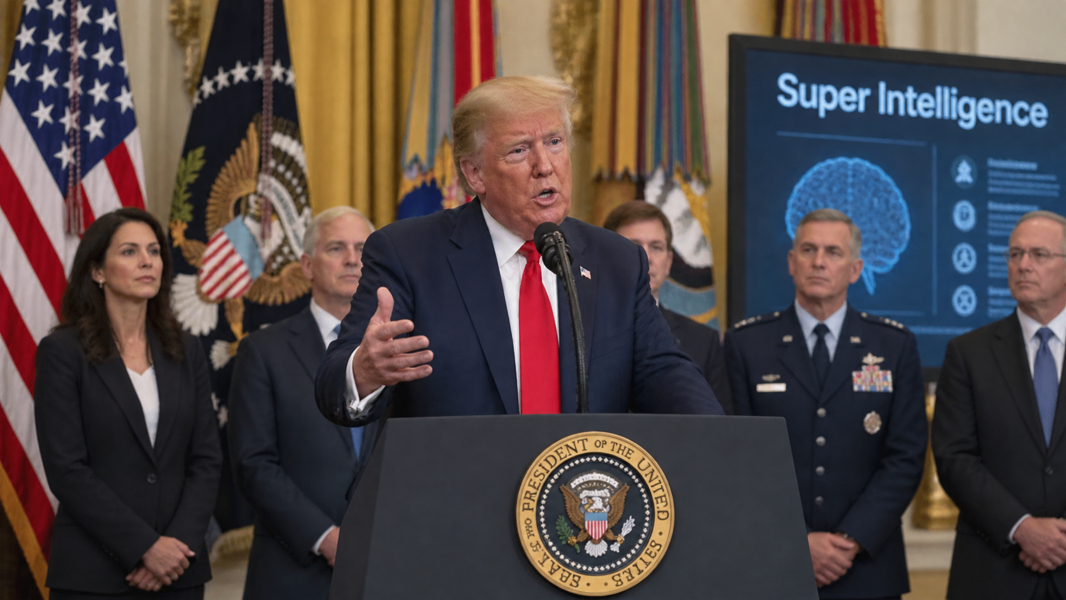
In a significant move regarding technology policy, former President Donald Trump has issued a directive to federal agencies to replace the term “artificial intelligence” (AI) with “super intelligence.” This announcement has raised eyebrows within the tech community and among policymakers, marking a notable shift in how AI is defined and communicated at the federal level.
Understanding the Directive
The directive aims to change the terminology used by federal agencies when referring to AI technologies. While details regarding the specific reasoning behind this choice have yet to be disclosed, the implications for federal policy and communication could be far-reaching. Here’s what is currently known about this directive:
- Terminology Shift: The term “super intelligence” suggests a layer of advancement and potential beyond what is commonly understood as AI. This change might reflect a desire to shift public perception and understanding of these technologies.
- Impact on Federal Agencies: Federal agencies will be required to adapt their language and potentially their policies to align with this new directive. This may affect how federal research, funding, and initiatives regarding technology are framed.
Practical Implications
The directive to promote “super intelligence” over AI signifies a larger conversation about how technology is perceived and regulated in the United States. Here are some potential implications:
- Influence on Businesses: As federal language changes, businesses and technology professionals may need to adjust their strategies and communication to align with federal terminology. This may particularly affect how businesses interact with government contracts or initiatives related to AI technologies.
- Regulatory Frameworks: Traditionally, regulatory frameworks surrounding AI have been shaped by its definition and applications. Altering the terminology could lead to re-evaluations of existing policies and regulations, which may impact tech companies’ compliance efforts.
- Public Perception: By emphasizing “super intelligence,” the administration could potentially create a perception of AI as not just a tool, but a more advanced and ubiquitous force in technology that requires careful attention and oversight.
What to Watch For
While the ramifications of this directive are still unfolding, it is important to monitor how federal agencies will implement this change. Observers should pay attention to:
- Official communications and documentation from federal agencies regarding AI technologies.
- Potential partnerships or funding initiatives that arise as a result of this terminology shift.
- Changes to the regulatory landscape surrounding AI applications in various industries.
Conclusion
Donald Trump’s directive for federal agencies to replace the term “AI” with “super intelligence” may signify a substantial shift in the conversation surrounding technology policy in the United States. As this directive unfolds, businesses and technology professionals should remain informed on the changes it brings and consider how to adapt to new federal expectations in terminology and policy. The ongoing evolution of AI and its regulatory environment will be crucial to monitor in the context of this new directive.