
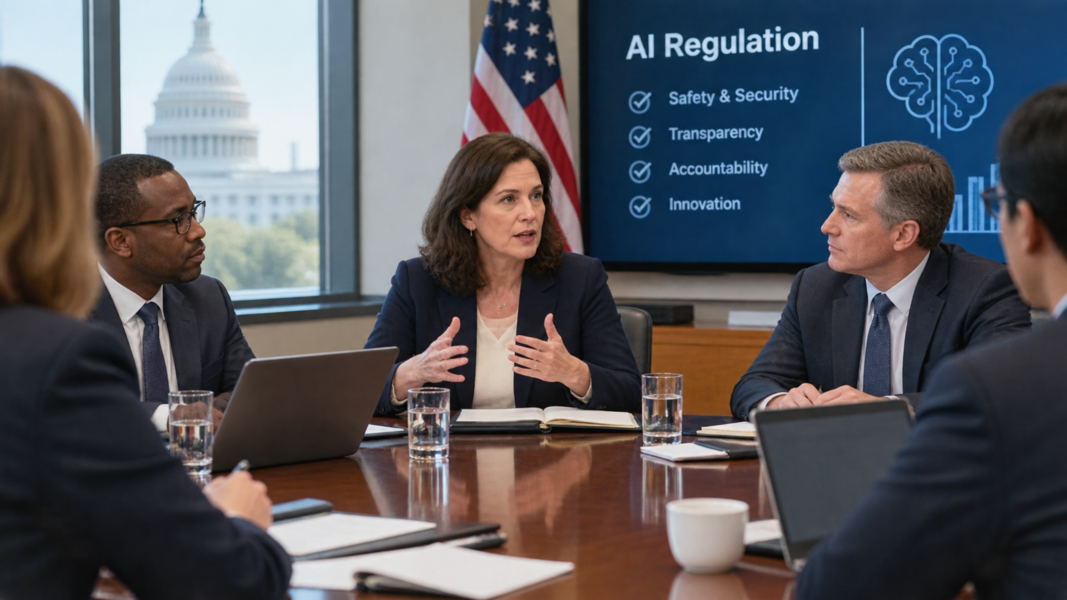
The rapid advancement of artificial intelligence (AI) technologies in the United States has sparked widespread discussions around the need for regulation. As AI becomes increasingly embedded in various sectors, from healthcare to finance and beyond, policymakers are grappling with how best to manage its growth while mitigating risks.
Current State of AI Regulation
As of now, the regulatory framework governing AI in the US is largely fragmented. Unlike the European Union, which has proposed a comprehensive regulatory approach with its AI Act, the US has yet to introduce a unified set of federal regulations specifically for AI.
Key Developments
Recently, several initiatives and proposals have gained traction at both state and federal levels:
- The National AI Initiative Act: Enacted in 2020, this act seeks to promote and coordinate the federal government’s AI activities. It aims to establish a framework that fosters research and development while addressing ethical considerations.
- State-Level Regulations: Various states, such as California and New York, are exploring their own AI regulations focusing on transparency, accountability, and privacy.
- Industry Guidelines: Organizations and tech companies are beginning to develop their own ethical guidelines and frameworks in the absence of federal regulations. These include best practices for AI development and usage to ensure fairness and prevent bias.
Challenges in AI Regulation
The complexity of AI technologies poses considerable challenges for regulation. Some key issues include:
- Rapidly Evolving Technology: AI is advancing at a pace that makes it difficult for regulations to keep up. This has led to concerns that existing laws may quickly become outdated.
- Ethical Concerns: Issues around bias, discrimination, and transparency in AI algorithms demand thorough consideration and may require specific regulations to protect consumers.
- Balancing Innovation and Safety: Policymakers are tasked with creating an environment that fosters innovation while ensuring public safety and ethical standards.
What Readers Should Know
For consumers and businesses, understanding the current landscape of AI regulation is crucial:
- Stay Informed: Businesses should follow developments in AI regulation closely, as changes may impact operational practices and compliance requirements.
- Implement Best Practices: Companies are encouraged to adopt ethical AI practices internally. This includes conducting audits of AI systems to check for bias and ensuring transparency in their algorithms.
- Engage with Policymakers: Stakeholders are encouraged to participate in discussions on AI regulation to help shape a framework that balances innovation with public interests.
The Path Forward
As AI continues to permeate various aspects of life, the conversation around regulation is likely to intensify. The need for comprehensive rules that govern the deployment and development of AI technologies in the US is evident.
While the landscape may currently seem complex and fragmented, ongoing dialogues among policymakers, industry leaders, and civil society will play a pivotal role in shaping a regulatory framework that acknowledges the nuances of AI.
Conclusion
In summary, AI regulation in the US is currently characterized by a lack of unified federal guidelines, with various initiatives and state-level efforts emerging. As technology evolves, the need for thoughtful regulation that promotes innovation while ensuring ethical use will remain critical.