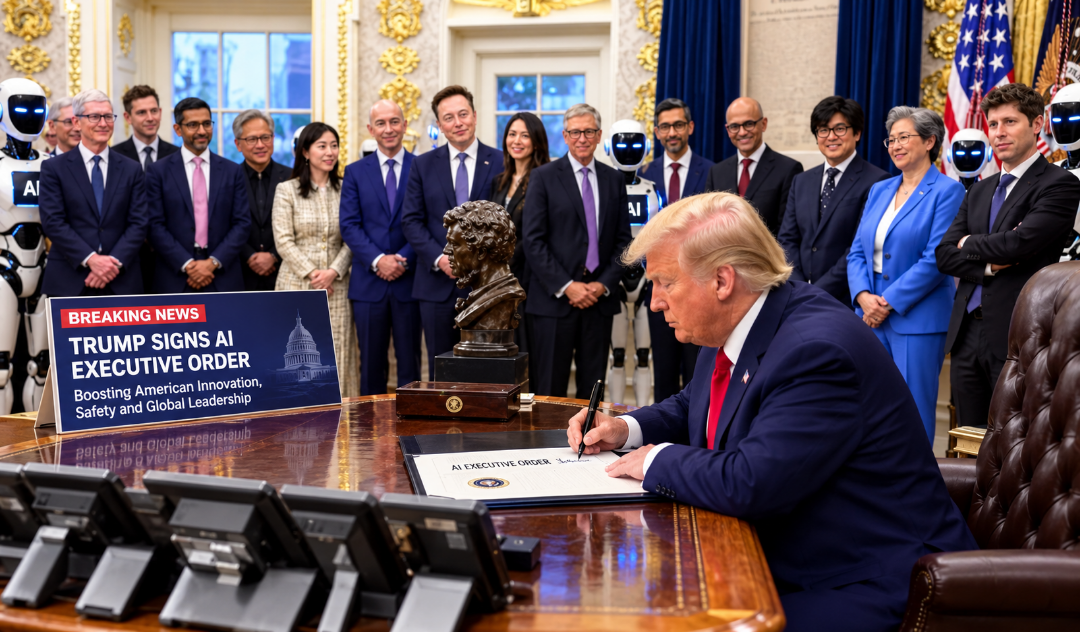
Trump Signs Voluntary AI Safety Standards with Top Tech Leaders: Implications and Insights
Introduction
President Trump has recently signed a set of voluntary AI safety standards in agreement with leading figures from the tech industry. This meeting of minds marks a significant event for both the industry and public safety regarding AI practices. In this article, we will explore what these standards entail, the reactions from tech companies, and the potential implications for small businesses and consumers in the U.S.
Details of the AI Safety Standards
The newly signed AI safety standards introduce guidelines aimed at promoting responsible AI usage among developers and companies. These standards focus on best practices and ethical considerations in AI development. The voluntary nature of these standards is noteworthy; while they aim to encourage self-regulation, many critics argue that without mandatory regulations, enforcement will be shaky at best. Experts suggest that the effectiveness of such voluntary measures may not hold up against the fast-paced advances in AI technologies.
Reactions from the Tech Industry
Responses from top AI companies have varied. Organizations like OpenAI and Anthropic have expressed cautious optimism, indicating their commitment to improving safety standards in their technology. However, others have raised concerns about the lack of enforcement mechanisms, fearing that the voluntary nature might lead to insufficient adherence. As a result, some industry leaders are pushing for a balance between self-regulation and government oversight to ensure accountability in AI developments.
Implications for US Businesses and Consumers
The implications of these voluntary AI safety standards can be significant, especially for small businesses looking to implement AI technologies. Entrepreneurs may benefit from clearer guidelines, which can enhance consumer trust. On the flip side, there are potential risks; for instance, without strong enforcement, consumers may still face dangers from poorly regulated AI products. Businesses will need to stay informed about these standards to ensure compliance and protect their interests.
Conclusion
In summary, the signing of the voluntary AI safety standards marks a pivotal moment in AI regulation. While they provide a framework for ethical considerations, the voluntary aspect raises questions about compliance and efficacy. As we look toward the future of AI regulation, it will be crucial for both industry leaders and policymakers to collaborate to establish robust standards that can adapt to the realities of technology growth.
—